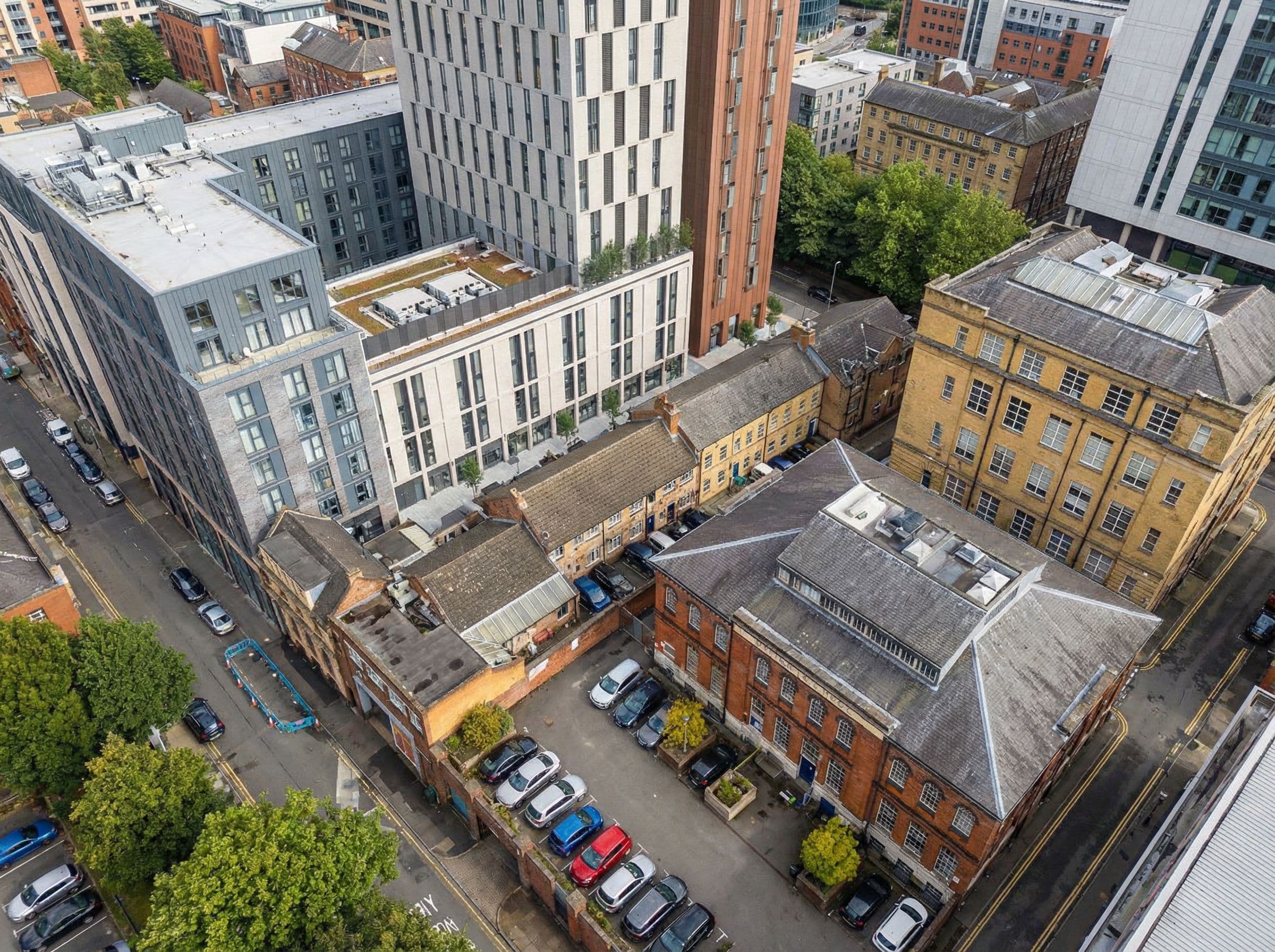

The Birmingham City Council’s planning committee has voiced significant concerns over the increasing number of unsuitable purpose-built student accommodation (PBSA) units being developed in the city centre. This warning comes even as they granted approval for 500 new PBSA apartments located on Suffolk Street Queensway.
Landmark Properties has received the green light to construct a 21-storey tower adjacent to the Mailbox, which will occupy a half-acre site and sit next to the under-construction 29-storey Vita Tower. The Vita Tower is set to provide 540 student beds upon its completion later this year, reflecting a broader trend aimed at addressing a predicted shortfall of approximately 5,000 student beds within the city centre.
Planning Approval Secured
During the meeting on 19 March, the planning committee approved the new development, yet concerns were raised regarding the viability of residential schemes in the light of inflationary pressures. A report accompanying the proposals noted a marked lack of developer interest in a previously approved residential scheme for the same site. This lack of interest stems from increased regulatory requirements established by the Building Safety Act and rising construction costs.
Cllr Martin Brookes, who represents Harbourne, expressed deep concern about the implications of these trends for both the planning committee and the city at large. He remarked, “What we’re saying is that you can get funding for niche projects like student accommodation, but residential accommodation is going to be really difficult because of inflation. I think that is something that should concern us, not just as a committee but as an authority as well.” Brookes went on to assert, “PBSA is a bubble which is going to burst, sooner or later. It’s unsustainable and it’s entirely subject to a lot of international pressures. It’s easy for countries to say they’re going to stop funding students to come to the UK.”
Developer’s Vision
The new scheme, designed by Glancy Nicholls Architects, features a 625ft tower alongside an 8-storey shoulder building, which together will provide a total of 506 student beds and around 14,000 sq ft of outdoor parks and courtyards for residents to enjoy. The development is anticipated to welcome students as early as September 2028, further contributing to the city’s growing PBSA landscape.
Planning committee chair, Cllr Lee Marsham, highlighted the increasing number of former council houses in his Nechells ward being converted into student accommodation. He noted the necessity of catering to the accommodation needs of local universities such as Aston University and Birmingham City University, as well as the University of Birmingham. “As a committee we have to take the application that is in front of us. I think this is a better scheme in terms of the design and look than the previous one which was given permission,” he stated, underlining the importance of balanced and sustainable development in the city.
Market Context
The approval of this new PBSA project comes amid a wider context of escalating demand for student accommodation in Birmingham, driven by an influx of students and an increasing number of educational institutions establishing a presence in the city. However, the warnings from councillors about the risks of over-saturation should not be ignored. The potential for a market bubble raises questions about the sustainability of continued investment in PBSA, particularly in light of rising costs and changing international dynamics.
The need for a more cautious approach towards PBSA development is becoming increasingly apparent, as stakeholders in the UK PBSA market must navigate the complexities posed by inflation and shifts in student demographics. Developers and investors are urged to consider not only the immediate economic benefits but also the long-term implications of their projects on the local housing landscape.
With these developments, Birmingham is at a critical juncture, balancing the need for sufficient student accommodation against the risk of over-dependence on PBSA. Stakeholders must ensure that the city’s growth in this sector aligns with broader housing needs and community objectives, fostering a sustainable and inclusive environment for all residents.