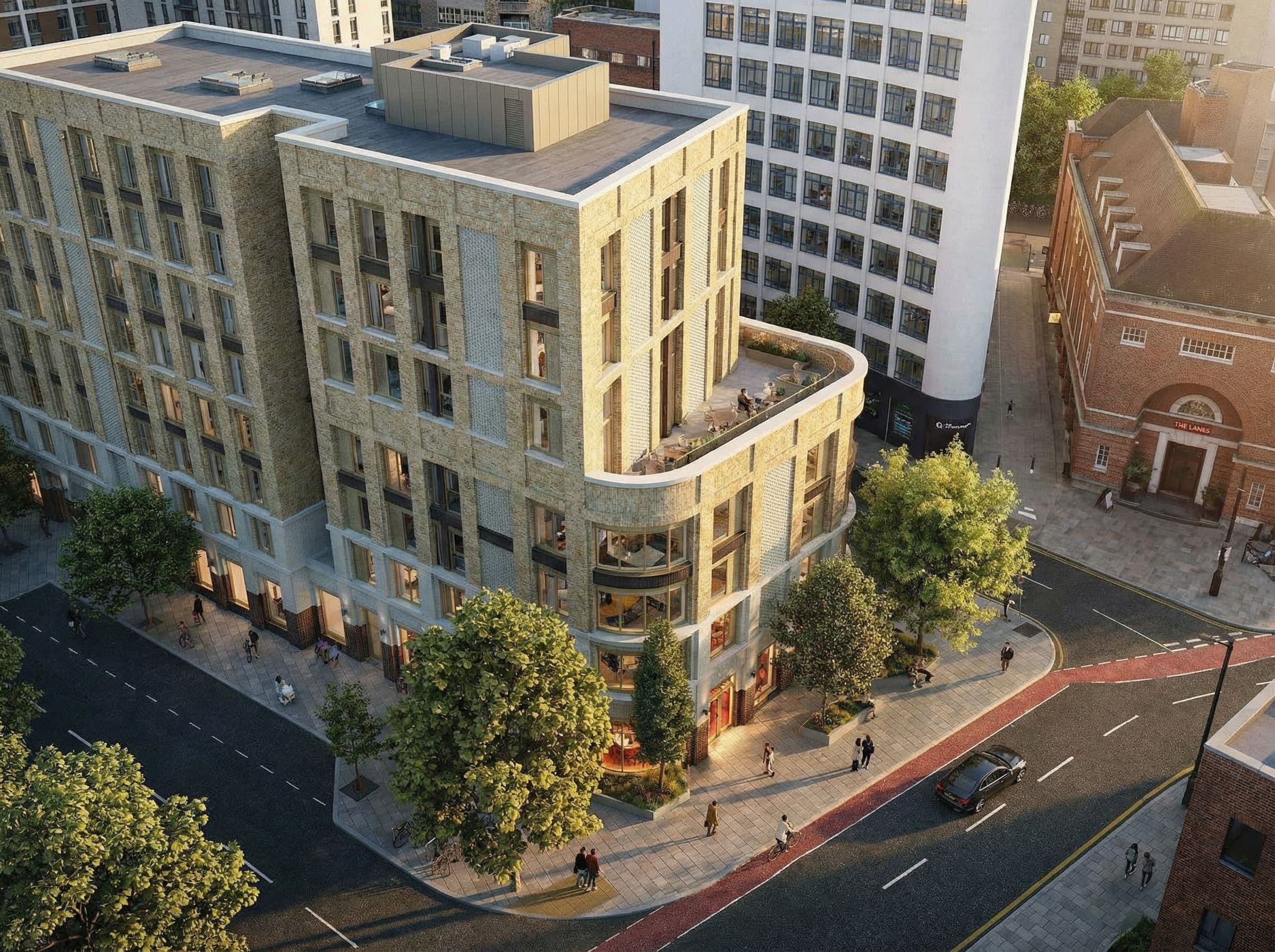

Walking through a city centre in the UK, one is likely to encounter numerous Purpose Built Student Accommodation (PBSA) developments. This observation, which I made during my placement in Bristol, highlighted that these projects often face considerable opposition. The objections raised are not only familiar but, in many instances, quite valid. However, the intensity and consistency of these objections prompt a deeper inquiry into the underlying assumptions about who is seen as belonging in urban environments.
Studentification and the Demand for PBSA
The UK student housing market is characterised by a persistent imbalance between the supply of accommodation and the demand for it, with an average of 2.7 students competing for each available bed. In major cities such as London and Bristol, this figure rises to over 3.5 students per bed (Savills, 2024). Consequently, the proliferation of student accommodation has become a hallmark of many urban areas across the UK. The phenomenon known as ‘studentification’ refers to the increasing dominance of student populations in local neighbourhoods, which often leads to objections that focus on the tangible impacts of these developments (Hubbard, 2008).
However, as Revington (2021) points out, this perspective can oversimplify a more intricate social and spatial dilemma. It raises critical questions about the design of spaces, the intended users, and the legitimacy of different populations’ presence within urban settings. Historically, negative perceptions of PBSA trace back to earlier forms of student housing, particularly Houses in Multiple Occupation (HMOs), which were often seen as basic and utilitarian. Concerns over parking, affordability, and noise were valid during those times. Nevertheless, high concentrations of student housing can contribute to escalating rents, displacement of long-term residents, and increased pressure on local services (Morgans, 2023). Moreover, poorly integrated developments can exacerbate these divisions, yet such assumptions do not always align with the realities of contemporary PBSA projects.
Belonging in Urban Spaces
This leads to pivotal questions regarding identity and a sense of belonging. Students are frequently perceived as transient individuals, distinct from the established local communities (Munro and Livingstone, 2012). Consequently, planning objections often reflect fears about change and the potential loss of community identity. The process of studentification thus represents not merely a physical transformation of neighbourhoods but also a significant social and cultural shift, wherein students are viewed as agents of change (Smith, 2005). This creates an unspoken ‘us versus them’ dynamic, positioning students as outsiders in relation to more permanent residents.
This situation prompts a reflection: what constitutes a ‘real’ community, and are we placing excessive value on permanence over other forms of belonging? Through my experiences in Bristol, I initially perceived these objections as challenges to be addressed through effective design or management. However, my involvement with PBSA schemes revealed that resistance can persist regardless of attempts to appease concerns. I now view these objections as part of a broader negotiation concerning space, identity, and the nature of change.
The Role of Design in Negotiating Belonging
In this context, the role of design becomes increasingly nuanced. An approach that emphasises integration—through active ground floor uses, shared public spaces, and mixed-use environments—can help position students as integral members of urban life rather than as isolated entities. For instance, developments like the one proposed for Nelson Street in Bristol incorporate active ground floor spaces designed to foster engagement between students and the surrounding community (Downing, 2025). Such initiatives can facilitate interactions that contribute to a more cohesive urban environment.
While these design interventions may not entirely eliminate opposition, they can significantly influence how different community groups engage with one another and how the concept of belonging is negotiated. Ultimately, rather than questioning whether student housing has a place in our cities, it is essential to consider how urban areas can better negotiate the concept of belonging itself.
References
Hubbard P. (2008) Regulating the social impacts of studentification: a Loughborough case study, Environment and Planning A, 40(2), pp. 323–341.
Morgans, D. (2023) The case for student living in urban design. Available at: https://www.chapmantaylor.com/insights/the-case-for-student-living-in-urban-design (Accessed: 5 April 2026).
Munro, M. and Livingston, M. (2012) Student Impacts on Urban Neighbourhoods: Policy Approaches, Discourses and Dilemmas. Urban Studies, 49(8), pp. 1679–1694.
Revington, N. (2021) Post-studentification? Promises and pitfalls of a near-campus urban intensification strategy. Urban Studies.
Savills (2024) UK cities need much higher rates of student housing delivery. Available at: https://www.savills.co.uk/blog/article/358493/commercial-property/uk-cities-need-much-higher-rates-of-student-housing-delivery.aspx (Accessed: 8 April 2026).
Smith D. P. (2005) ‘Studentification’: the gentrification factory, in: Atkinson R., Bridges G. (Eds) Gentrification in a Global Context: The New Urban Colonialism, pp. 72–89. Abingdon: Routledge.