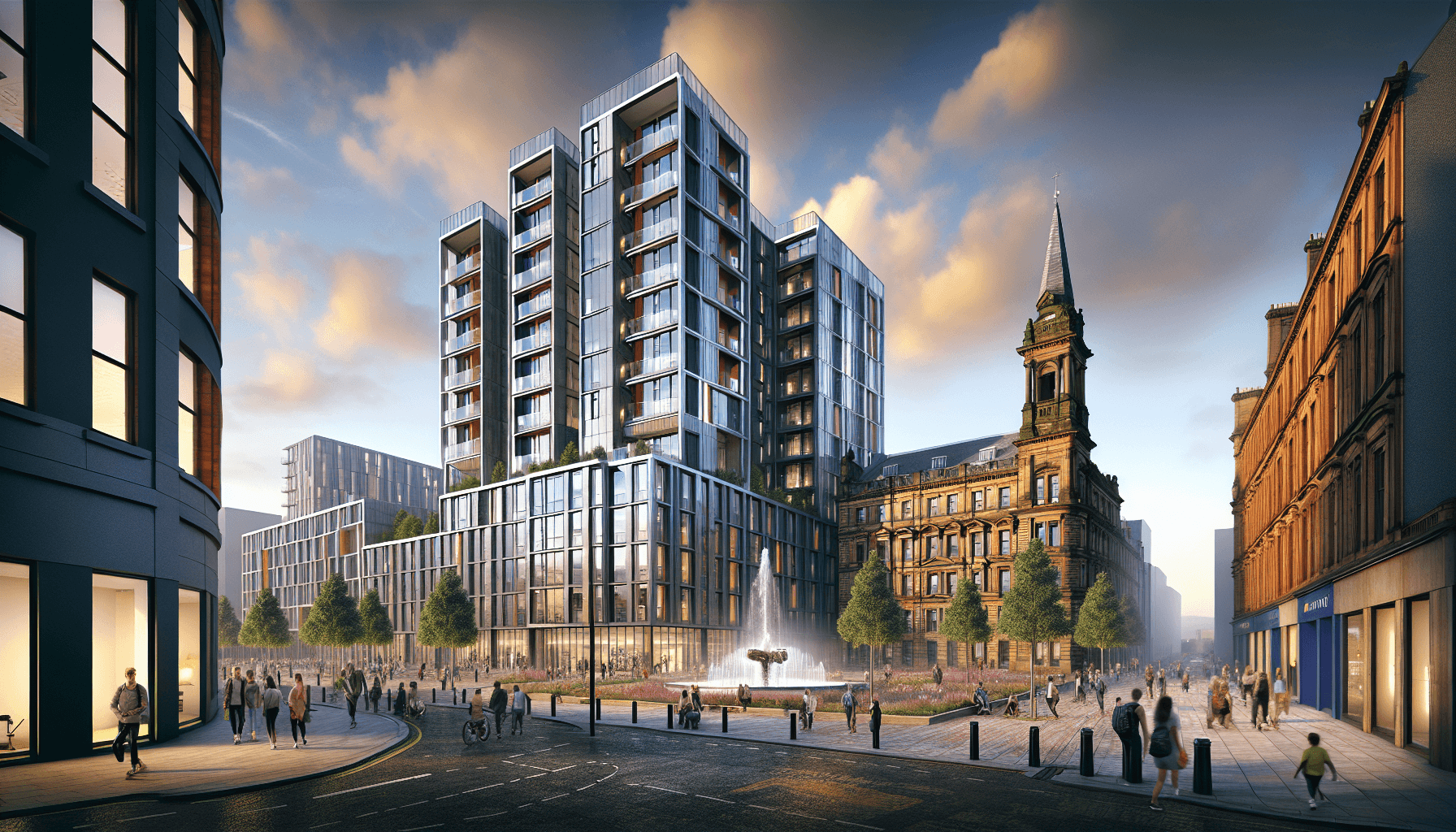

A new 20-storey student housing tower is poised to transform the skyline in Glasgow, with plans to replace the site of the Herald newspaper offices at 200 Renfield Street. This ambitious project will not only provide accommodation for students but also includes co-living communal flats, catering to the growing demand for modern living arrangements in urban areas. The increasing popularity of student accommodation in the UK, especially in vibrant cities like Glasgow, reflects a broader trend in the property market towards developments that meet the needs of a diverse student population.
As part of the development, the C-listed Annan Memorial fountain, a significant historical landmark, will be restored and relocated to a new public square, thereby preserving its heritage while enhancing the local environment. The incorporation of such features reflects a commitment to maintaining the character of the area amidst new architectural developments. This approach not only addresses community concerns but also enriches the overall appeal of the project, indicating a thoughtful balance between heritage and modernity.
The integration of a historical landmark within the development highlights a growing trend in the UK PBSA market, where developers are increasingly recognising the importance of blending modern amenities with local history. This not only adds value to the project but also fosters a sense of belonging among residents, who often seek connections to their surroundings.
Development Details
According to planning documents submitted by MRP 200 Ren Limited, the project will feature 381 purpose-built student accommodation (PBSA) units and 167 co-living units. The plans also include provisions for commercial spaces that could house shops, restaurants, and leisure facilities, contributing to a vibrant mixed-use environment. The developer’s vision aims to create a space that promotes community well-being and social interaction, recognising the importance of amenity spaces for residents. This mixed-use approach is increasingly favoured in the PBSA sector as it fosters a sense of community and enhances the living experience for students.
The strategic inclusion of commercial spaces within the development is particularly significant given the growing trend towards live-work-play environments. As urban areas become more densely populated, developments that offer an integrated lifestyle are more appealing to students and young professionals. Consequently, this project could serve as a model for future PBSA developments that prioritise convenience and community engagement.
Moreover, the presence of commercial spaces is expected to enrich the local economy by providing job opportunities and attracting foot traffic that benefits existing businesses. Such synergies often lead to an increase in community engagement, as residents participate in local events and activities, further enhancing the vibrancy of the area.
Community Response
The planning application has elicited mixed reactions from local residents. Concerns have been raised regarding the scale of the proposed development, with one neighbour expressing that it seems disproportionate to the available land and the existing demand for housing in the area. Specific worries included the potential for increased wind speeds due to the building’s height, particularly the 20-storey student accommodation section. Such feedback is critical for developers, highlighting the necessity of engaging with community sentiment to ensure successful project outcomes.
In contrast, another local resident voiced strong support for the proposal, highlighting the positive impact it could have on the community. They noted that the development would not only introduce much-needed accommodation but also enhance the public realm through the thoughtful restoration of the historic fountain. This sentiment underscores the importance of balancing development with community heritage and engagement, particularly in an era where sustainability and social responsibility are increasingly valued.
Community engagement in the planning process is essential for fostering a sense of ownership among local residents, which can lead to greater support for similar projects in the future. As the PBSA sector continues to evolve, developers must prioritise transparency and collaboration to mitigate opposition and create developments that resonate with the community.
Planning Considerations
Currently, the planning application is under consideration by Glasgow City Council. The proposal aims to deliver a genuinely mixed-use development that aligns with the city’s broader urban regeneration goals, reflecting a trend towards sustainable living environments that cater to both students and the local community. The integration of commercial spaces alongside residential units indicates a forward-thinking approach to urban planning, recognising the need for a holistic living experience.
This development’s potential to contribute significantly to the local economy cannot be understated. By providing jobs during the construction phase and ongoing employment opportunities once operational, the project could positively impact the Glasgow labour market. Additionally, the influx of students and residents will likely stimulate local businesses, reinforcing the importance of student accommodation in urban economic strategies.
As the UK continues to experience a surge in student numbers, particularly from international markets, the demand for quality PBSA is expected to rise. This development not only addresses the immediate need for housing but also sets a precedent for future projects that integrate economic vitality with community-focused design.
Market Implications
This proposed development is significant within the context of the UK PBSA market, where there is a growing demand for high-quality, well-located accommodation that can support the influx of students in urban centres. With increasing numbers of students seeking accommodation in cities like Glasgow, developments like this one are crucial in addressing the housing shortage while fostering community spirit. The focus on co-living arrangements also reflects evolving preferences among younger residents for communal living experiences that encourage social interaction.
Moreover, the project’s emphasis on community engagement and the preservation of local heritage could serve as a blueprint for future developments in the PBSA sector. As investors and developers look to create sustainable and attractive living spaces, the integration of historical elements alongside modern conveniences will be key to enriching the urban landscape. This shift not only enhances the appeal of new developments but also strengthens the relationship between residents and their environments.
In addition, with the rise of digital nomadism and remote work, there is an increasing demand for flexible living spaces that cater to both students and young professionals. The shift towards co-living not only addresses affordability concerns but also cultivates a sense of community, which is fundamental in today’s urban environments.
The proposed student accommodation tower in Glasgow stands as a testament to the evolving landscape of the UK’s student housing sector, addressing current demands while honouring the past. As the project moves forward, it is anticipated to set new benchmarks in the PBSA market, showcasing how thoughtful design can harmoniously blend with historical context and community needs.