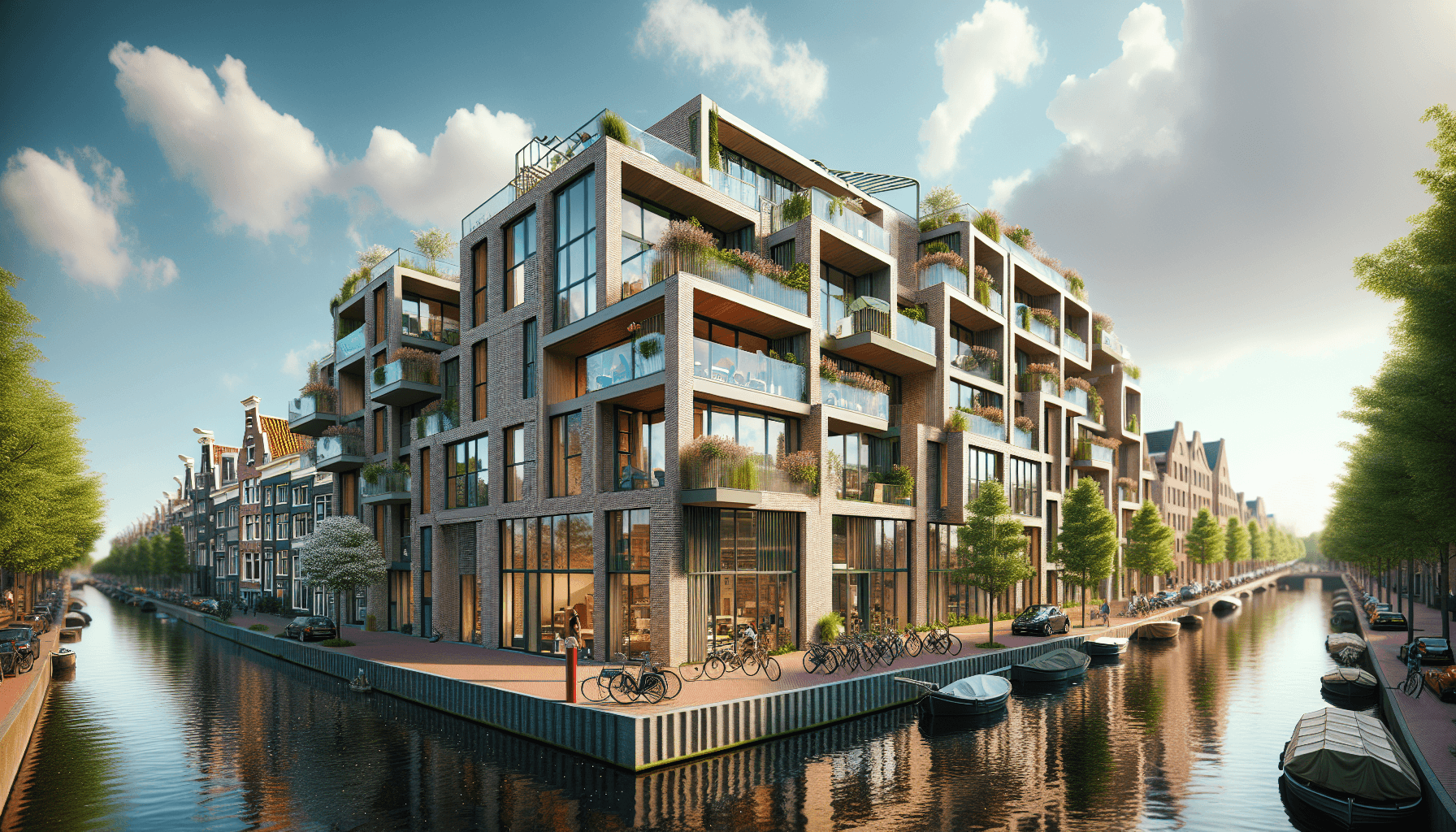

The Netherlands occupies a unique and pivotal role in the European higher education landscape, recognised for its international orientation and the considerable pressures it faces regarding student housing. With nearly 800,000 students enrolled across 14 research universities and 36 universities of applied sciences, the Dutch higher education system has gained a reputation as one of the most globally appealing. However, as government regulations tighten, private rental supplies dwindle, and student demand consistently outstrips available accommodation, the Netherlands is entering a transformative period that may offer substantial opportunities for institutional PBSA operators.
International Students: Demand Amidst Slowing Growth
According to Nuffic, during the 2024-25 academic year, approximately 131,000 international degree students were enrolled in Dutch higher education. This represents a significant slowing in growth, with only a 3% overall increase recorded—the lowest in a decade—compared to a robust 12% three years prior. The stagnation in new international enrolments is particularly evident, with only a mere 0.4% growth, resulting in roughly 51,800 new entrants.
The enrolment landscape is diverse, with research universities and universities of applied sciences (HBO) both observing declines of over 5% in new international bachelor’s enrolments. However, technical institutions such as TU Eindhoven and TU Delft stand out, reporting over 20% growth in international enrolments. This surge reflects a strategic pivot towards a form of “useful” internationalisation that aligns with labour market demands in engineering and technology.
Germany continues to be the largest source of international students, although numbers are on the decline. Italy, China, Romania, and Spain follow in the rankings, while Türkiye has demonstrated the most rapid growth, increasing by 25%. This diversification in source markets mirrors broader trends across Europe and underscores the Netherlands’ ongoing appeal as a destination for English-language studies.
Policy Context: The ‘Internationalisation in Balance’ Bill
A significant factor contributing to current market uncertainty is the Dutch government’s advancement of the Internationalisation in Balance (WIB) Bill. This legislation proposes that two-thirds of credits in most bachelor’s programmes must be delivered in Dutch, alongside the implementation of a numerus fixus, or capacity limit, for non-EU students. The goal is to mitigate the pressures that rapid internationalisation has placed on housing, language integration, and public services.
This Bill has sparked considerable debate within the academic sector. Technical universities, which rely heavily on international talent to fill critical STEM positions, have actively lobbied against these blanket restrictions. In response to the proposed legislation, Dutch universities are taking measured steps to manage international student intakes, insisting that the Bill’s proposal for non-Dutch taught programmes undergo an assessment prior to implementation. Furthermore, universities have collectively agreed to halt their active recruitment efforts at international fairs, opting instead to limit outreach to programmes linked to sectors experiencing regional or national labour shortages. This approach draws a clear line between recruitment and merely providing information to prospective students.
Additionally, the preparatory year for international students is being phased out, as institutions conclude existing provider contracts, which diminishes the pipeline of eligible international bachelor’s candidates. On the matter of student accommodation, universities are explicitly advising international students against travelling to the Netherlands without securing accommodation in advance and are collaborating with municipalities to bolster housing supply.
While the legislative outcome remains uncertain, the inclination towards a more selective and managed internationalisation model appears clear. For accommodation providers, this indicates a transition from a volume-driven demand model to one focused on quality: fewer students overall, but a more dedicated, longer-stay international cohort.
The Housing Crisis: A Stark Reality
While the policy landscape is fraught with uncertainty, the housing crisis in the Netherlands is a stark reality that is only worsening. The country faces a significant structural housing deficit that has deteriorated over the past year, with no immediate resolution in sight through private rental initiatives.
The severity of the housing issue is highlighted in the Landelijke Monitor Studentenhuisvesting 2025 (LMS), a national student housing monitor published by Kences and the Ministry of Housing, which surveyed over 41,000 students. The report reveals alarming trends: the supply of student accommodation is diminishing faster than new units are being constructed. For the academic year 2024-25, an estimated 13,500 net student housing units were removed from the market. Although approximately 5,000 new rooms have been added, the private rental sector has seen a decline of about 17,800 units as landlords exit the market.
The current accommodation supply across 19 Dutch student cities stands at 322,400 rooms for a student population of over 817,000. Private landlords are selling properties at an unprecedented rate, primarily driven by legislative changes such as the 2024 Affordable Rent Act and stricter ‘Box 3’ taxation on investment properties, which have rendered small-scale student renting commercially unviable for numerous private owners. Kences estimates that current sell-off rates are approaching 1.5 times those of the previous year, potentially resulting in the elimination of up to 45,000 private student rooms within just two years. In Amsterdam, the private room supply plummeted by over 25% within a single year.
Students are increasingly abandoning their quest for independent housing. Eight years ago, 52% of students from Dutch HBO and WO institutions lived in independent accommodation; that figure has now decreased to 44%. More alarmingly, the desire for independent living among students has dropped from 59% to 49% over the same period. Kences director Jolan de Bie has characterised this trend as a signal of students giving up their search entirely—an indication of demand being suppressed not by preference, but by a lack of realistic options.
Rents are sharply increasing. The latest Kamernet Rent Report (Q4 2025), published in February 2026, indicates an annual rent growth slowdown to just 1.7%, equating to an average increase of €11 per month. In major hubs such as Amsterdam and Haarlem, there was no change at all, suggesting that prices in the most expensive areas may have reached a ceiling. However, this apparent stabilisation in the Randstad region has not spread nationwide. Significant rent increases have shifted towards regional university cities, with Leeuwarden (+19.1%), Leiden (+17%), Maastricht (+14.1%), Zwolle (+13.5%), and Groningen (+13.3%) all showing considerable year-on-year rises. Monthly rents in these cities now range from €500 in Leeuwarden to €655 in Leiden, illustrating the geographic spread of affordability issues and the growing divergence between Randstad and non-Randstad markets.
Investor Sentiment: A Cautious Outlook
While uncertainty surrounding international student policy and limitations on English-language instruction caused hesitation among investors in the Dutch PBSA market in 2025, the outlook for 2026 appears significantly more optimistic. According to CBRE’s Real Estate Market Outlook 2026, foreign institutional capital largely stayed away from the Dutch market in 2025, with recovery in real estate investment primarily led by domestic capital. CBRE anticipates a further 10.5% increase in investment volume, with capital likely to shift towards operational assets that exhibit stable user demand and clear rental growth potential—a category that student housing is well-positioned to fit. Pension funds, in particular, are expressing renewed interest in PBSA, especially as the European Union categorises it as social infrastructure.
JLL concurs that while stringent regulations have hindered growth, recent policy changes are paving the way for increased investment activity in 2026. Cities such as Amsterdam, Rotterdam, Utrecht, Groningen, and Eindhoven continue to attract investor interest; however, planning restrictions and land scarcity necessitate long-term strategies and innovative partnerships to unlock viable opportunities. The demand profile is also evolving as universities face growing pressure to provide adequate pastoral care for international students, prompting a shift from merely finding “any room” to prioritising institutional-grade housing that includes on-site support and professional management standards.
GSL will be hosting its Executive Meeting Series: The Netherlands in Amsterdam on 16 April 2026. This invitation-only event will gather top PBSA investors, developers, and operators to discuss emerging opportunities in the market, the changing policy landscape, and the operational models necessary for scalability in one of Europe’s most competitive and high-conviction student housing sectors.