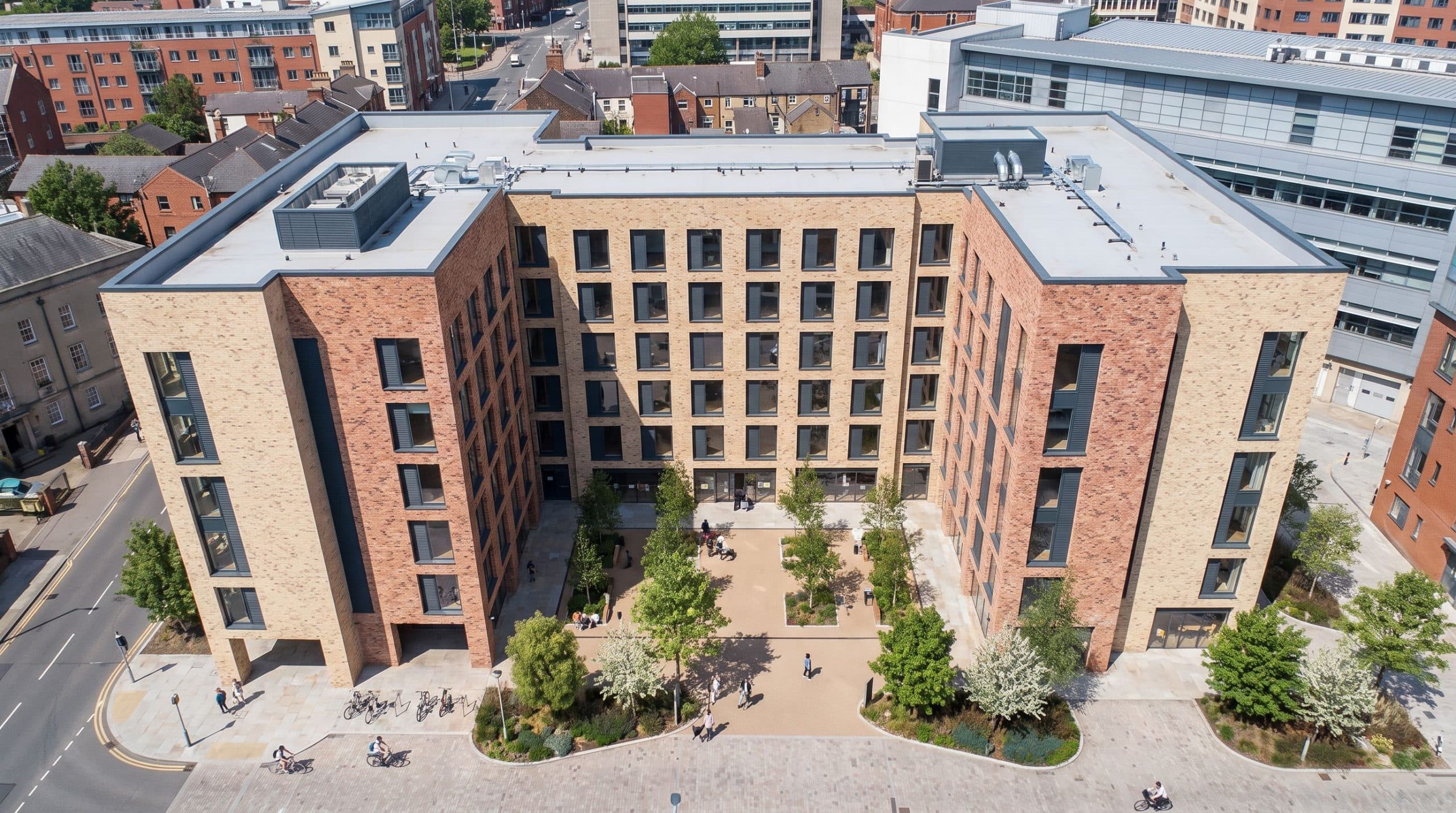

Planning applications have often been viewed as dry documents, yet a closer inspection of those associated with significant purpose-built student accommodation (PBSA) projects reveals a compelling shift in focus. Increasingly, the most convincing submissions are no longer solely reliant on appealing architecture or visual attractiveness. Instead, they now articulate a clear necessity for the scheme, demonstrating its alignment with local market demands and its contribution to the long-term goals of the city.
Case Study: Dundee’s Keiller Quarter
The recent planning application for Dundee’s Keiller Quarter exemplifies this new approach. At first glance, the proposal appears typical for a major PBSA development, aiming to transform the former Keiller Centre into 318 student beds, alongside commercial space and enhanced public areas. However, a deeper dive into the accompanying documentation reveals that the accommodation itself is not the primary focus of the proposal.
Significantly, much of the planning rationale centres around reconnecting pedestrian routes, enhancing the public realm, and stimulating the regeneration of a long-neglected section of the Dundee city centre. While regeneration has been a component of PBSA planning for years, the current trend reflects a rapid transition from merely discussing physical development to engaging with critical questions about market requirements, local strategies, and the broader role that additional PBSA schemes should serve within the urban landscape.
Nottingham’s Evidence-Based Approach
Nottingham stands as a noteworthy example in this evolving dialogue. The local council has accumulated over a decade’s worth of occupancy data to inform its evaluations of new PBSA proposals, moving beyond mere assumptions about student demand. A recent survey indicated that studio accommodation in the city recorded vacancy rates of 16.1%, contrasting with 11.6% for cluster flats, thereby shaping the council’s perspective on the types of accommodation future developments should offer.
This nuanced understanding signifies a shift in discussions around PBSA in Nottingham; it is not merely about the necessity for more student accommodation, but rather the specific forms of PBSA that the city genuinely requires. This analytical framework is now influencing planning decisions significantly. For instance, the proposal on Glasshouse Street was recommended for refusal by planning officers who determined there was inadequate evidence to substantiate the need for the proposed style and type of student housing.
Broader Trends in PBSA Planning
The report highlighted that the proposed development failed to align with the accommodation mix sought by the council’s planning directives. The ongoing debate is not centred on whether Nottingham needs more PBSA; it is about ensuring that new schemes meet the specific requirements identified by the local authority. Nottingham is not an isolated case; London’s planning guidelines also take into account affordability and local housing strategies.
While each local authority has its unique approach to PBSA, a common theme has emerged: planning decisions are now extending beyond the immediate site considerations to include how each proposal integrates within the larger context of the local market. This evolution does not imply that obtaining planning consent has become significantly more challenging, nor does it lessen the importance of design and regeneration. Rather, the depth of the evidence supporting planning cases is undergoing transformation.
The Importance of Comprehensive Evidence
Occupancy surveys, pipeline analyses, local policy insights, university data, and market assessments are increasingly becoming standard components of major planning applications. Developers and investors are now expected to present proposals that not only exhibit high-quality design but also convincingly articulate why such a proposal is both necessary and beneficial for the city’s broader objectives.
The Keiller Quarter PBSA application underscores this broader evolution, presenting a robust case for regeneration while also illustrating how the development aligns with Dundee’s broader ambitions for its city centre. The fate of this application will ultimately hinge on the planning authority’s evaluation, yet it exemplifies a significant shift in how PBSA proposals are being justified today.