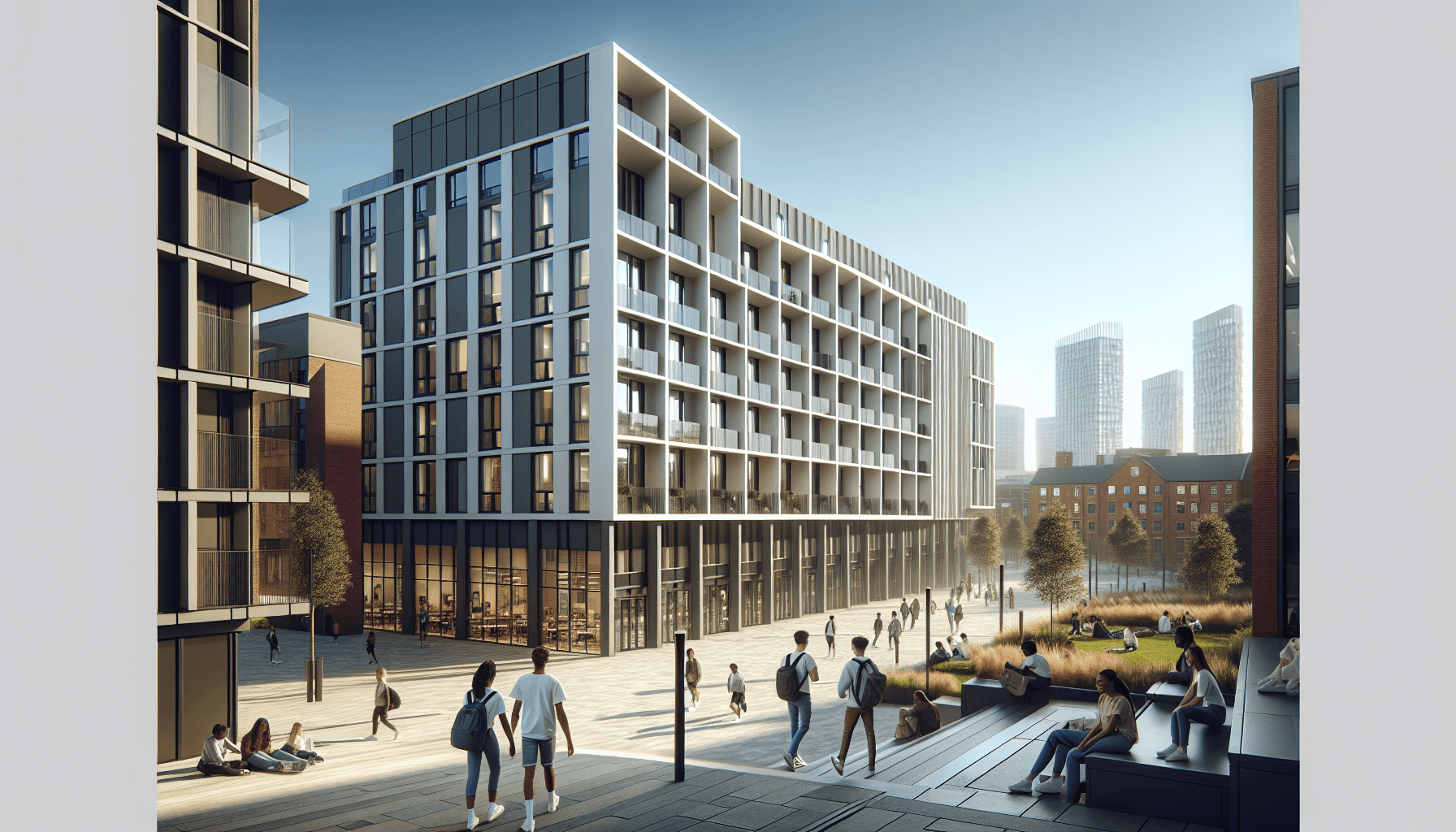

Enis Bayik, Managing Director at Home & Co, provides an insightful perspective on the evolving expectations of institutional investors within Germany’s purpose-built student accommodation (PBSA) sector. With occupancy rates nearing 100% across various locations, the market is currently facing a structural undersupply. However, for capital markets, merely achieving high occupancy is no longer deemed a reliable indicator of a property’s value. Instead, investors are increasingly prioritising unit-level net operating income (NOI), margin control, and scalable operating frameworks, reflecting a shift towards more sophisticated performance metrics.
Operational Capabilities and High-Performance Models
The definition of a next-generation PBSA operator is increasingly centred around operational control rather than sheer scale. Essential capabilities include centralised leasing and sales processes, dynamic pricing strategies at the unit level, disciplined cost benchmarking, and transparent reporting throughout the resident lifecycle. Top-tier operators manage each bed as a distinct profit centre, rather than depending solely on aggregated occupancy rates.
Despite these critical capabilities, many operators in Germany find themselves lagging. Common practices such as decentralised on-site leasing, static rent structures, and retrospective performance reporting continue to prevail. Consequently, margin leakage remains a significant issue, even with headline occupancy rates exceeding 95%. Key areas of leakage often include labour-intensive staffing models, inconsistent rent collection processes, reactive maintenance, and poorly developed ancillary revenue strategies.
From the perspective of investors, these operational inefficiencies detract from the longevity of cash flows. High-performing operators mitigate these challenges through centralised operating platforms, predictive maintenance approaches to manage costs effectively, and rigorous benchmarking of expenses per bed. For institutional capital, transparency regarding unit-level NOI is now considered a fundamental requirement.
Hybrid and Multi-Demographic Asset Management
The integration of hybrid living arrangements has become a defining characteristic of the German PBSA landscape. Assets are increasingly catering to a diverse demographic, including students, interns, PhD candidates, visiting academics, and young professionals. In fact, nearly 50% of private PBSA stock in major German cities is now operating under a hybrid model.
The primary concern lies in the tendency to view hybrid living merely as a branding initiative instead of a comprehensive operating framework. Different demographic groups possess markedly varied expectations regarding service intensity, privacy, community involvement, and flexibility. Without clear operational segmentation, assets may face service misalignment, cost inflation, and a dilution of profit margins.
Leading operators actively segment their service offerings according to resident demographics. For instance, students might prioritise community engagement, while young professionals may seek efficiency and streamlined services. Staffing models need to adapt accordingly, employing lean on-site teams supported by centralised functions, rather than maintaining fixed, labour-intensive setups.
Moreover, amenities and experiential strategies must also evolve to meet these diverse needs. Multi-functional spaces tend to outperform specialised amenities in terms of capital efficiency. Additionally, offering optional, bookable services is far more effective than providing bundled offerings that inflate operational expenses. The ability to future-proof portfolios amid supply constraints hinges on operational flexibility rather than merely amassing features.
Pricing, Leasing, and Revenue Optimisation
Historically, robust demand has obscured inefficiencies within German PBSA pricing frameworks. Predominantly, operators have relied on semester-driven leasing cycles and fixed rents, which have failed to capitalise on peak demand periods and limited control over lease duration and room configurations.
A necessary transformation involves moving away from static rent models towards active revenue management practices. Operators must be adept at dynamically adjusting pricing, lease terms, and room allocations in response to fluctuating demand. Flexibility in leasing can enhance yield, but only if guided by clear regulations and strict pricing discipline; otherwise, it risks becoming a liability rather than a benefit.
Implementing dynamic pricing in conjunction with centralised leasing strategies significantly enhances price integrity, responsiveness, and overall unit-level performance. For investors, this translates into greater revenue resilience and diminished volatility throughout leasing cycles.
Technology and Data-Driven Operations
In today’s market, technological integration is not simply a distinguishing factor but an essential requirement for achieving institutional-grade PBSA operations. Nonetheless, numerous operators still operate with fragmented technology stacks across various domains such as booking, customer relationship management, payment processing, and resident engagement. This fragmentation limits transparency and hampers timely decision-making.
Next-generation operators are increasingly deploying integrated, end-to-end platforms that facilitate multi-product living experiences within a cohesive data environment. Interlinking booking, leasing, payments, and resident lifecycle management is critical for achieving real-time operational and financial oversight.
From an investor’s perspective, relevant metrics now extend beyond traditional occupancy rates. Key performance indicators include unit-level NOI, occupancy metrics by demographic segment, the cost of customer acquisition versus lifetime value, cost per ticket, and conversion rates within sales funnels. These metrics provide the vital connection between operational effectiveness and financial outcomes.
Market Comparison and Transferable Lessons
Germany’s PBSA market contrasts sharply with those of Southern European nations like Spain, Italy, and Portugal. The German market is distinguished by its longer lease terms, higher regulatory complexities, more substantial payroll structures, and comparatively lower service expectations. Conversely, Southern European markets typically feature shorter stays with a stronger service orientation, where ancillary revenue can contribute 15% to 22% of total revenue in premier assets.
While Germany may not adopt these models in their entirety, there are valuable lessons that can be selectively applied. For instance, effective ancillary monetisation can enhance returns without compromising the quality of student living, provided it is executed with discipline. Furthermore, community programming can be implemented in a modular fashion, avoiding excessive costs. Accelerated pricing feedback mechanisms can significantly enhance revenue capture and facilitate superior cost control.
Germany’s PBSA market is likely to continue facing structural undersupply in the foreseeable future. However, this advantage alone will not suffice to meet the evolving demands of institutional investors. Instead, capital is increasingly being directed towards operators that can demonstrate scalable platforms, transparency in data management, and disciplined approaches to margin management.
In an environment where occupancy levels are consistently high, sustainable outperformance will be reserved for those operators who ensure that not only is occupancy high but that overall performance is maximised. Questions surrounding margin leakage, hybrid asset management, and scalable operational platforms will be comprehensively examined during the session titled “Operating the Next Generation of PBSA: High-Performance, Hybrid & Future-Ready” at the GSL Executive Meeting Series: Germany.
We invite you to join us for an engaging, operator-led discussion on the essential elements required to deliver institutional-grade PBSA performance in Germany. Applications are now open.