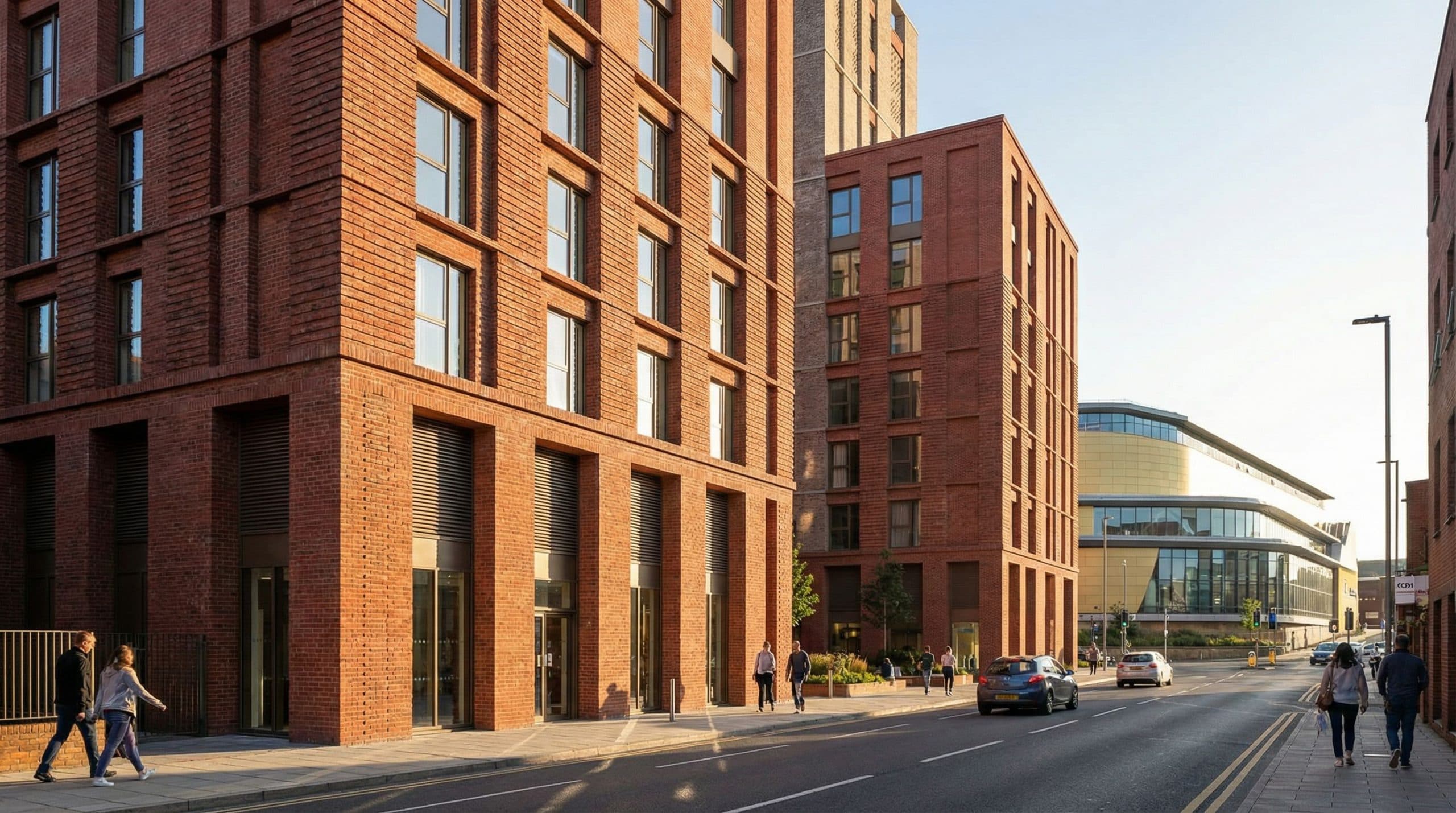

A substantial development in Exeter has received the green light from city councillors, allowing the construction of a significant block of purpose-built student accommodation (PBSA) at the site of the current JobCentre, known as Clarendon House. This decision, made by a narrow vote, comes amid discussions surrounding the project’s potential impact on the area and its suitability for the city’s evolving housing needs.
Planning Approval Secured
The proposed development, led by the property developer Zinc, will consist of a 10-storey building featuring approximately 300 flats designated for students attending Exeter University. This project aims to address the ongoing demand for PBSA in Exeter, particularly as the local housing market continues to experience pressures from increasing student populations. However, some councillors voiced concerns regarding the adequacy of existing student accommodation in the city, suggesting that the rise in student numbers may not warrant such a large-scale development.
Cllr Lynn Wetenhall, representing the Green Party in Newton and St Leonards, expressed her reservations during the planning discussion, arguing that Exeter already possesses sufficient PBSA. She suggested that the site could be repurposed for general housing instead, stating, “Be brave enough to push back on the argument that this is only suitable for students. I believe it would be suitable for high-quality flats.” Her comments reflect a growing sentiment that the balance between student accommodation and general housing needs is crucial for Exeter’s urban planning strategy.
Community Concerns and Perspectives
Concerns regarding the scale of the proposed building were echoed by Keith Lewis from the Exeter Civic Society, who described the project as ‘overbearing’. He indicated that the design prioritised height and room numbers at the expense of the city’s heritage, raising questions about the public benefits that would be derived from such a large structure. “What public benefit is there?” he questioned, underscoring a common apprehension that large-scale developments may overshadow the character of local communities.
Conversely, Matthew Rowe of Rok Planning defended the project, emphasising that over 10,000 students are currently residing in houses of multiple occupation (HMOs) throughout Exeter. He argued that increasing the supply of PBSA would alleviate pressure on the local housing market, potentially freeing up properties for families. “If there is any harm here, it is at the lowest degree,” he asserted, advocating for the project’s public benefits against the concerns raised.
Design Modifications and Future Prospects
Historic England has expressed concerns regarding the architectural design of the new block but has not lodged a formal objection. Initially, Zinc had proposed a more ambitious plan that included a 20-storey building with 350 beds. However, following feedback from the community and stakeholders, the plans were revised to lower both the height and the number of student rooms to 297, resulting in a more balanced design.
The council’s strategic director for place, Ian Collinson, described the location as “one of the best” for student accommodation, reinforcing the notion that this site represents a gateway opportunity for ambitious architectural developments. He stated, “This is the kind of location where we can be ambitious. It is a gateway site, so it needs a gateway building.” This perspective illustrates the potential for such developments to enhance the urban landscape of Exeter.
Final Outcome and Vote
Despite the ongoing concerns, the planning committee ultimately passed the proposal with a vote of six to three, with Cllr Atkinson abstaining from the decision. The deliberation highlighted the importance of finding a balance between the need for student accommodation and preserving the integrity of the community. As the development progresses, its impact on the local housing market and community dynamics will be closely monitored, reflecting broader trends within the UK PBSA market.