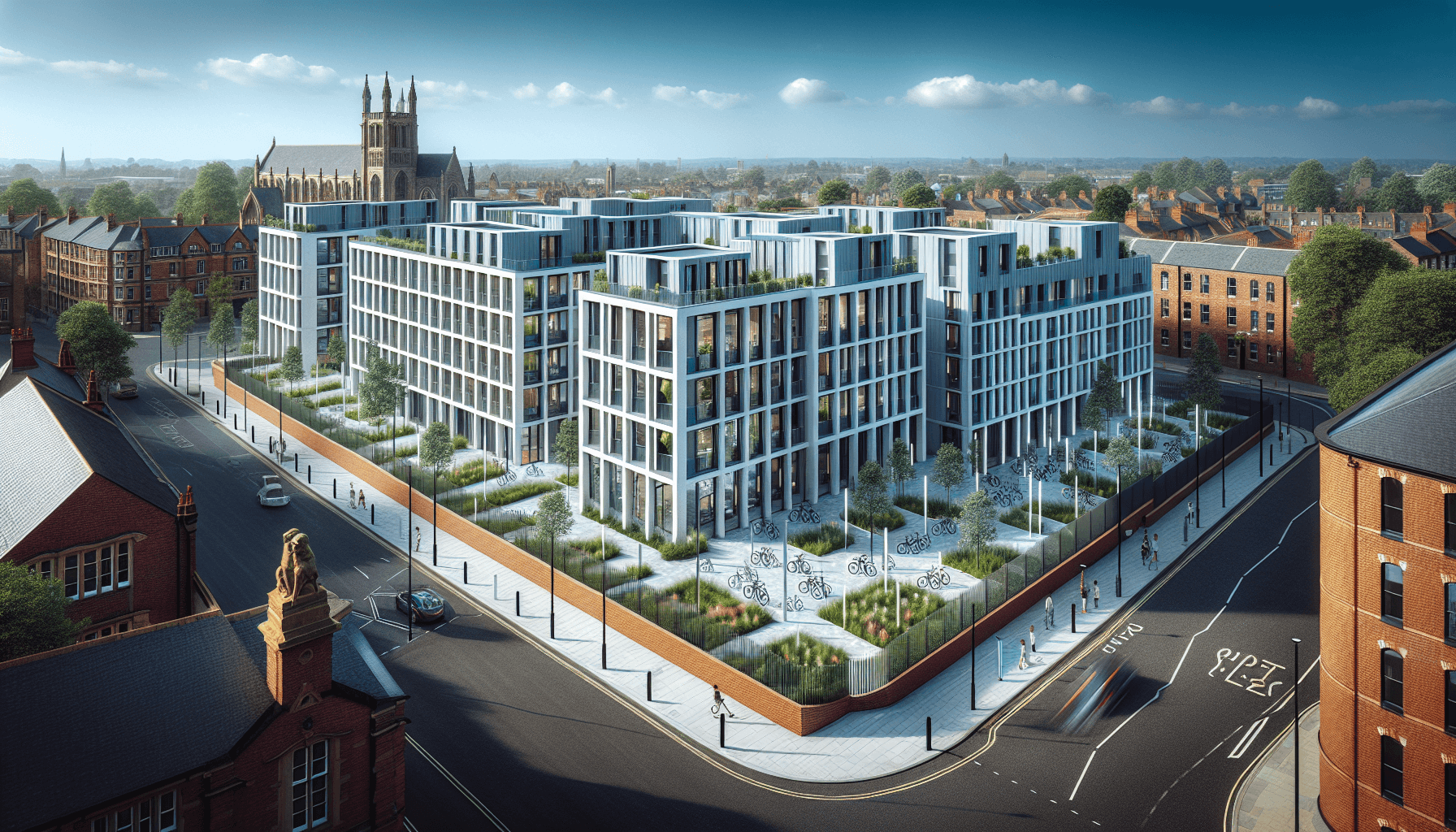

Plans to construct more than 800 coliving studios and student accommodation units on the outskirts of Exeter city centre have recently received the green light from the local planning committee. This ambitious development will see the creation of 399 purpose-built student accommodation (PBSA) units and 414 coliving studios, all housed in buildings rising up to six storeys high on the site of the old police station and magistrates’ court located on Heavitree Road.
The site, which has been vacant since 2021, was previously subject to a planning application that was denied by councillors due to concerns regarding its potential impact on the character of the area. However, following a thorough review process, Exeter City Council’s planning committee voted in favour of the project by a margin of eight votes to two during a meeting on Monday. This decision reflects a significant shift in the local authority’s approach to student accommodation, demonstrating a willingness to adapt to the evolving needs of the community.
This approval is particularly noteworthy in the context of the broader UK PBSA market, which is increasingly recognising the importance of diverse housing options for students. The integration of coliving spaces with traditional student accommodation not only caters to the varying preferences of today’s students but also promotes a more communal living experience.
Project Details and Developer Insights
Developer NCO (Seven) Limited has outlined an innovative vision for this new development, which will be entirely car-free, promoting sustainable living within the community. The project will feature 448 bicycle spaces to encourage cycling as a primary mode of transport. This initiative aligns with current trends in urban development, where sustainability is of paramount importance.
Notably, a fifth of the units will be designated as affordable housing, addressing the increasing need for economical living options in the city amidst rising demand. The decision to incorporate affordable units is crucial, given the escalating costs of living and housing in Exeter, which can be particularly burdensome for students. By providing a proportion of these units at lower rental rates, the developer is not only fulfilling a social responsibility but also enhancing the project’s attractiveness to potential investors.
As the project progresses, it will be essential to monitor its impact on the local housing market. The provision of affordable units may set a precedent for future developments, encouraging other investors and developers to prioritise affordability in their projects.
Environmental Considerations
As part of the commitment to sustainability, the planning meeting revealed that while 79 trees will be removed from the site to facilitate construction, a total of 183 new trees will be planted, contributing positively to the local environment. This move aligns with broader efforts within the PBSA market to incorporate eco-friendly practices into new developments.
Such initiatives are increasingly important as investors and operators seek to align with environmental, social, and governance (ESG) criteria. The emphasis on green practices not only meets regulatory requirements but also enhances the reputation of developments in the eyes of environmentally conscious students and families.
Market Context and Student Demographics
The growing demand for student accommodation in Exeter is underscored by a recent report from the Devon Housing Commission, which highlighted that the average annual rent for PBSA in the city stands at £8,600. This figure reflects the increasing pressure on housing as the number of full-time students at the University of Exeter has surged from 22,684 in the academic year 2019/20 to 26,888 in 2023/24. The approval of this development is a strategic response to the escalating need for quality living spaces among students.
Furthermore, the demographic trends point towards a sustained increase in student enrolments, with the University of Exeter expanding its offerings and attracting a diverse student body. This trend indicates a robust market potential for PBSA investments, making developments like the one in Exeter even more pertinent.
Future Implications for the PBSA Market
As the UK PBSA market continues to evolve, projects like the one in Exeter are pivotal in shaping the future landscape of student accommodation. The integration of coliving spaces within traditional student housing frameworks is indicative of a trend towards more communal and flexible living arrangements, which are increasingly favoured by today’s student demographic.
This development not only addresses immediate housing needs but also sets a precedent for future projects aiming to balance affordability, sustainability, and community living. The successful execution of this project will likely serve as a benchmark for future developments across the region and beyond, demonstrating to investors the viability of combining coliving and student accommodation.
The approval of this significant development in Exeter marks a notable milestone in the evolution of student accommodation in the UK. As investors and operators observe the changing dynamics of the market, the outcomes of this project will be closely watched, potentially influencing future investment strategies in the PBSA sector.