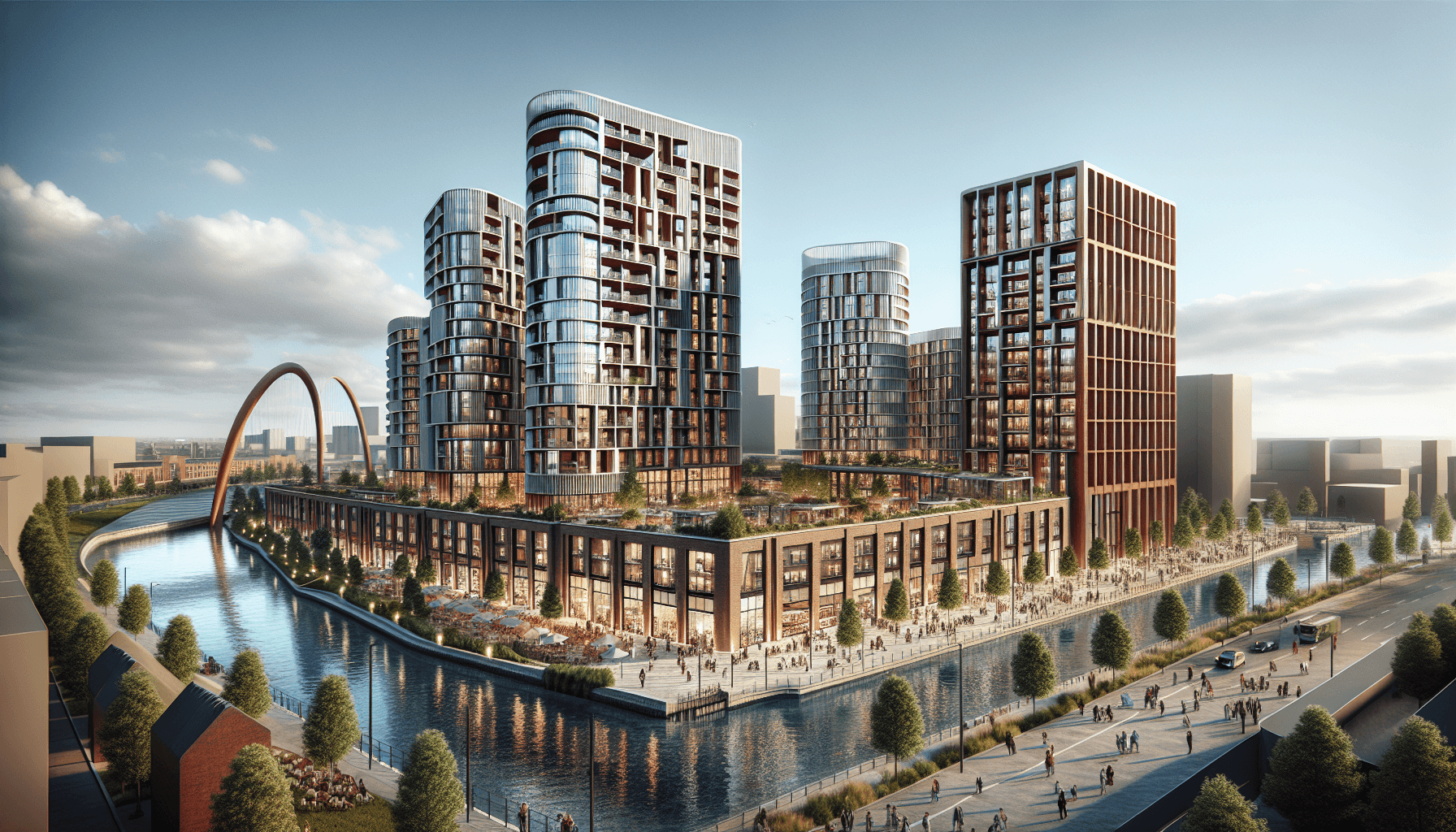

Downing has recently put forward a planning application aimed at redeveloping a brownfield site situated on the River Clyde in Glasgow into a pioneering purpose-built student accommodation (PBSA) and co-living development. This site, previously the headquarters of the Daily Record and Sunday Mail newspaper, located at 40 Anderston Quay, will consist of three distinct blocks that together will offer a total of 1,135 bedrooms, complemented by a commercial unit spanning 3,700 square feet.
Project Overview
Among the three blocks planned, two will be designated for PBSA units while the third will cater to co-living arrangements. The first PBSA block will be a striking 29-storey structure housing 551 bedrooms, whereas the second PBSA block will be a more modest 10-storey building featuring 282 bedrooms. The co-living block, standing at 13 storeys, will accommodate 302 bedrooms, designed to include shared lifestyle amenities on every floor along with a commercial retail space on the ground level.
Developer’s Vision
Ian Harrison, the projects director at Downing, expressed enthusiasm regarding the submission of plans for 40 Anderston Quay, emphasising that this initiative aligns with Downing’s ongoing growth. He noted, “The scheme not only serves to further Downing’s presence in Glasgow, but also as our new landmark Manchester co-living development Square Gardens achieves 98% occupancy upon completion, clearly demonstrating the high demand for this type of accommodation amongst students and young professionals.”
Implications for the PBSA Market
Downing brings over 35 years of experience in creating high-quality living environments for students and local communities in vibrant university cities. With this development, the company aims to enhance the lively atmosphere of Anderston’s city centre, bolstering its connections to local universities. Moreover, this initiative supports Glasgow’s city centre vision for 2030, which is focused on attracting and retaining the UK’s and the world’s top students and young professionals.
The proposed development not only highlights the growing trend towards mixed-use spaces combining student accommodation with co-living arrangements but also reflects an increasing recognition of the demand for modern, flexible living solutions in urban areas. This trend is particularly significant as cities like Glasgow continue to evolve and adapt to the needs of a diverse student and young professional population.